
What Are the Steps to Buying a First Home in the UK?

Buying your first home in the UK can feel complex, but the process itself follows a clear and structured path. From getting your finances to finally receiving the keys, each stage plays a specific role in moving the purchase forward.
Here’s a step-by-step guide to how it works.
1. Work Out Your Budget
Before you start looking at properties, you need to understand what you can afford. A great way to find out is by appointing a mortgage advisor.
This includes:
Reviewing your income and monthly expenses
Checking your credit score
Calculating how much you could borrow
It’s also important to factor in additional costs such as solicitor fees, surveys, and moving expenses, not just the property price itself.

2. Save for a Deposit
Most first-time buyers in the UK will need a deposit of at least 5-10% of the property value, although putting down more can help secure a lower mortgage, resulting in lower monthly payments.
You may also consider government support schemes, such as a Lifetime ISA or Help to Buy.
The Help to Buy scheme was designed to assist buyers in getting onto the property ladder with a smaller deposit. Under the scheme, buyers could purchase a new-build home with a 5% deposit, supported by an equity loan from the government.
While the Help to Buy Equity Loan scheme in England closed in 2023, many buyers are still familiar with it, and similar support options, such as Shared Ownership or Lifetime ISAs, continue to play a role for first-time buyers today.
Understanding what schemes are available at the time of purchase can make a significant difference to affordability.

3. Get a Mortgage Agreement in Principle (AIP)
An Agreement in Principle (also known as a Decision in Principle) is a statement from a lender indicating how much they may be willing to lend you.
While not a formal offer, it:
Gives you a clear price range
Shows estate agents you’re a serious buyer
4. Start House Hunting
With your budget confirmed, you can begin searching for property.
When viewing homes, consider the following as these will be factored in to the value of the property price:
Location and transport links
Property type (new build or existing home)
Size and layout
Future needs
Take your time at this stage, this is one of the biggest financial decisions you’ll make.

5. Make an Offer
Once you’ve found a property you would like to purchase, you’ll make an offer through the estate agent or seller.
Keep in mind:
The asking price is not always final
Negotiation is normal
The agreement is not legally binding at this stage
6. Apply for a Mortgage
After your offer is accepted, you’ll submit a full mortgage application.
The lender will:
Carry out affordability checks
Review your financial history
Arrange a valuation of the property
If approved, you’ll receive a formal mortgage offer.
7. Hire a Conveyancer or Solicitor
A conveyancer or solicitor manages the legal side of the purchase.
They will:
Conduct property searches (e.g. local authority, environmental)
Handle contracts
Liaise with the seller’s solicitor
This stage ensures there are no legal issues with the property.
8. Arrange a Property Survey
A property survey is not always required, especially for new builds, but it is worth doing if the property you are considering buying is old. Although your lender will carry out a valuation, this is not a detailed inspection.
A separate survey helps identify potential problems, such as structural issues or repairs that may be needed. Depending on the property, you can choose from different levels of survey. If the survey comes back and there are issues, there is a chance of renegotiating the price of the property, but not always guaranteed.
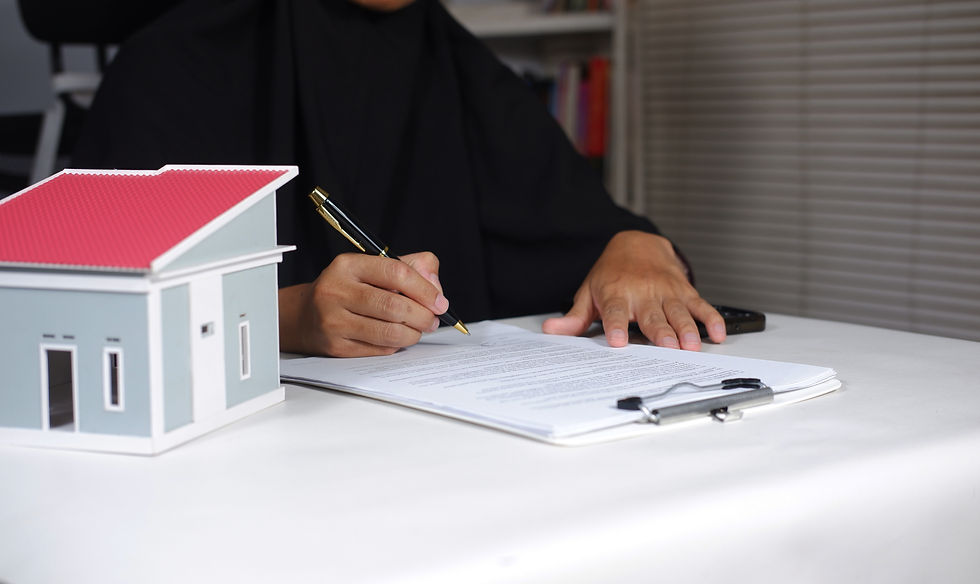
9. Exchange Contracts
Once all legal checks are complete, contracts are exchanged.
In England & Wales, a potential buyer can expect most of the required paperwork to be contained in a single contract. In Scotland, however, the equivalent paperwork will be broken down into several individual letters, called the missives. Understand how missives work here.
At this point:
You pay a deposit (typically around 5-10%)
The purchase becomes legally binding
A completion date is agreed
Backing out after the exchange can result in financial penalties. At this stage, the agreement is legally binding, and withdrawing from the purchase can carry significant consequences. Most notably, the buyer risks losing their deposit, which is typically around 5–10% of the property’s value. In addition, the seller may pursue legal action to recover any losses incurred as a result of the failed transaction—this could include costs related to remarketing the property or accepting a lower offer from another buyer. There may also be liability for professional fees already incurred, such as solicitor or conveyancing costs. For this reason, all checks, finances, and decisions must be fully in place before contracts are exchanged.
10. Complete the Purchase
On completion day:
● The remaining funds are transferred
● Ownership of the property is officially yours
● You receive the keys and can move in!

Final Thoughts
While buying your first home in the UK involves several steps, the process is linear and well-established. Understanding each stage in advance can make the experience far less stressful and help you move forward with confidence.
In simple terms, the journey looks like this:
Budget → Deposit → Mortgage → Search → Offer → Legal process → Exchange → Completion


